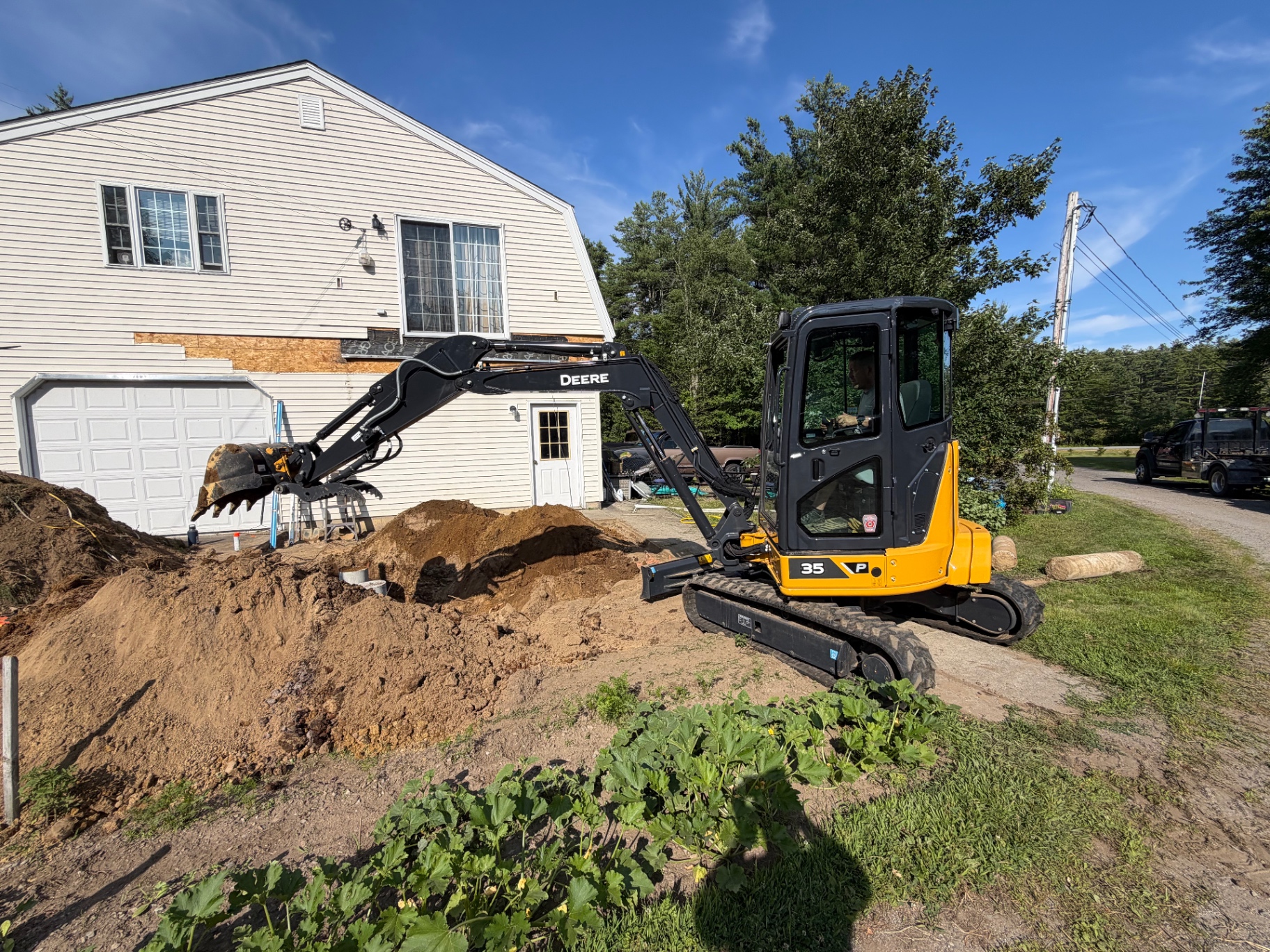
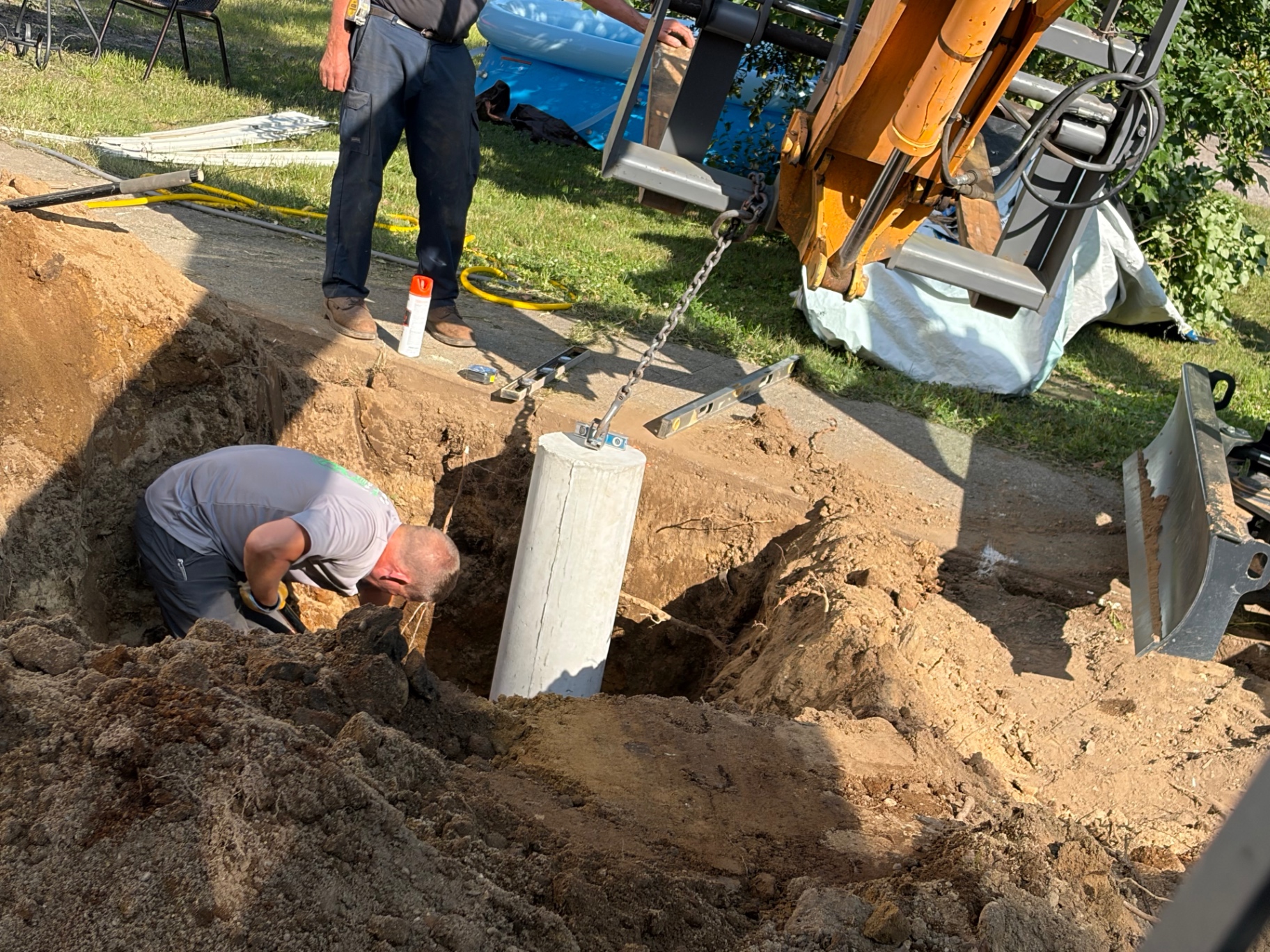
Septic components are rarely in a convenient open field. Tanks, D-boxes, and lines end up in narrow side yards, tucked between a house and a garage, behind a fence with a single gate, or set close to a foundation because that's where the layout allowed. A full-size excavator simply can't get to a lot of those spots — and when it can't, the work turns into hand digging or tearing out landscaping, a driveway, or fencing to make room.
A compact machine changes that math. It fits through gates and side yards, works on a normal residential lot without wrecking it, and still has the reach and breakout power to do actual excavation: getting down to a buried tank, opening up around a D-box, digging to a broken pipe, and backfilling when the repair is done. Small refers to the footprint, not to what it can dig.
Zero tail swing is the other half of it. On a conventional excavator, the back of the cab swings out past the tracks as the machine rotates, so anything within that arc — a wall, a deck, a fence, a parked car — has to be cleared or avoided. A zero-tail-swing design keeps the rear inside the track width, so the operator can spin and work right alongside a house or fence line without the counterweight hitting it.
For a homeowner, the practical result is a smaller hole, less disturbed lawn, and fewer things that have to be moved or taken apart before digging can start — on jobs where a bigger machine would either not fit or would cost you more in collateral damage than in digging.